






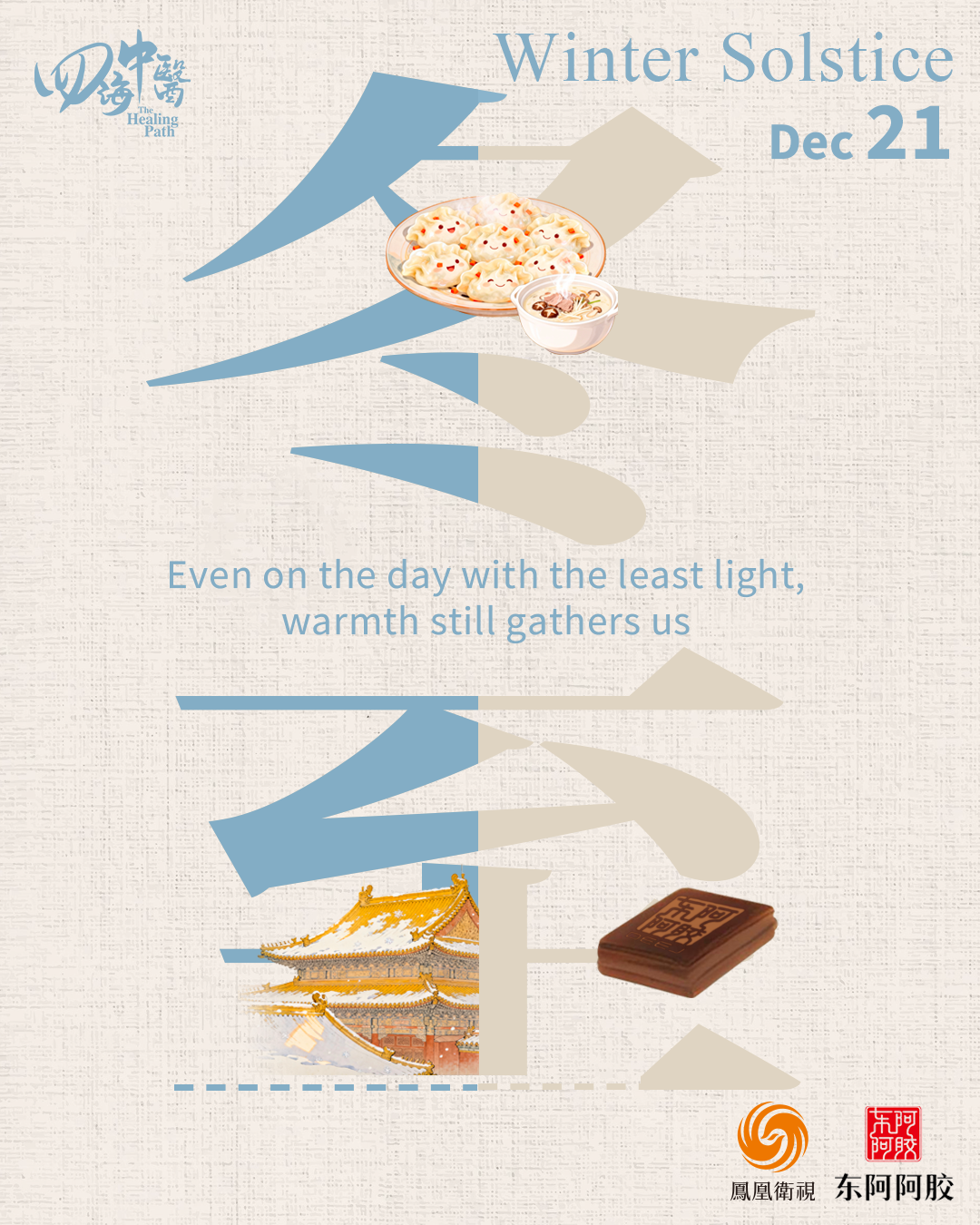
冬至,是一年中白晝最短的一天,也是季節悄然轉折的時刻。
在中式養生觀中,此時陰氣至極,陽氣初生,萬物由盛寒走向回暖。
中國人以飲食來回應這一節氣。北方圍坐吃餃子、喝羊湯,南方多以湯圓相伴。食物各異,寓意卻相同。在寒冬最深處,守住溫暖,滋養身心,也珍惜相聚。
從養生角度看,冬至並非大補之時,而在於順勢溫養。此時人體氣機內斂,應減少耗散,護住陽氣,為來年的生長積蓄力量。
飲食宜溫熱熟食,清淡而有營養,少生冷、易消化;作息上順應晝短夜長,適當早睡,讓身體慢下來,讓能量慢慢回歸。
即使在光最少的這一天,溫暖也正在悄然匯聚。在身體之中,也在人與人的陪伴之間。
The Winter Solstice(冬至) marks the shortest day of the year, but also the turning point of the season.
In traditional Chinese wisdom, this is when yin reaches its peak and yang quietly begins to return.
In China, people mark this moment with warm, comforting foods. In the north, families gather over dumplings or lamb soup; in the south, tangyuan is often served. The dishes may differ, but they all reflect the same idea—staying warm, nourished, and connected in the coldest days.
From a wellness perspective, the Winter Solstice is not about heavy tonics, but gentle support. As energy turns inward, it is a time to protect vitality, support the body's core, and allow warmth to build naturally.
Warm, cooked meals that are easy to digest are preferred, while rest becomes just as important as nutrition. Shorter days invite earlier sleep, slower rhythms, and quieter evenings.
Even on the day with the least light, warmth is already gathering, within the body, and among the people we share winter with.






快來分享你的看法吧